

Sensorimotor Psychotherapy in Riverside, CA

When Your Body Reacts Before Your Mind Has Time to Understand Why
You may know you're safe.
Your body reacts anyway.
Someone raises their voice and your chest tightens.
A particular smell suddenly makes you nauseated.
Conflict causes you to freeze.
A relationship feels uncertain and your entire nervous system goes on alert.
You understand what is happening intellectually, but your physical reactions seem to operate on their own.
Sensorimotor Psychotherapy is a body-oriented therapeutic approach designed to help clients understand and work with the physical, emotional, cognitive, and nervous-system responses that may be connected with trauma and other difficult experiences.
At Lifepath Center, appropriately trained therapists may incorporate sensorimotor-informed interventions into trauma-focused and individualized therapy when clinically appropriate.
We provide trauma therapy in Riverside, California, as well as telehealth therapy throughout California.

What Is Sensorimotor Psychotherapy?
Sensorimotor Psychotherapy was developed by Dr. Pat Ogden and integrates concepts from body-oriented psychotherapy, trauma treatment, attachment theory, neuroscience, and mindfulness.
Traditional talk therapy often begins with:
"What are you thinking?"
Sensorimotor work may also ask:
"What do you notice happening in your body right now?"
Clients may learn to notice:
Muscle tension
Breathing changes
Posture
Movement impulses
Heart rate
Tightness
Numbness
Heat or cold
Shaking
Physical urges
Changes in energy
These physical experiences can provide information about how the nervous system is responding.


Why Does Trauma Affect the Body?
When danger occurs, the body prepares for survival.
The nervous system may mobilize responses such as:
Fight
Flight
Freeze
Collapse
Submission
Protective movement
These reactions can occur extremely quickly.
After trauma, the nervous system may become highly sensitive to reminders of the original danger.
Even when a person intellectually understands that the threat is gone, their body may continue reacting as though protection is still necessary.

"I Know I'm Safe, but I Don't Feel Safe"
This is a common experience in trauma treatment.
Logic and physiology don't always update at the same speed.
You might tell yourself:
"Nothing bad is happening."
while experiencing:
Racing heart
Shallow breathing
Tight muscles
Nausea
Dizziness
Urge to escape
Emotional shutdown
Sensorimotor interventions help clients develop awareness of these reactions without immediately becoming overwhelmed by them.
Bottom-Up and Top-Down Processing
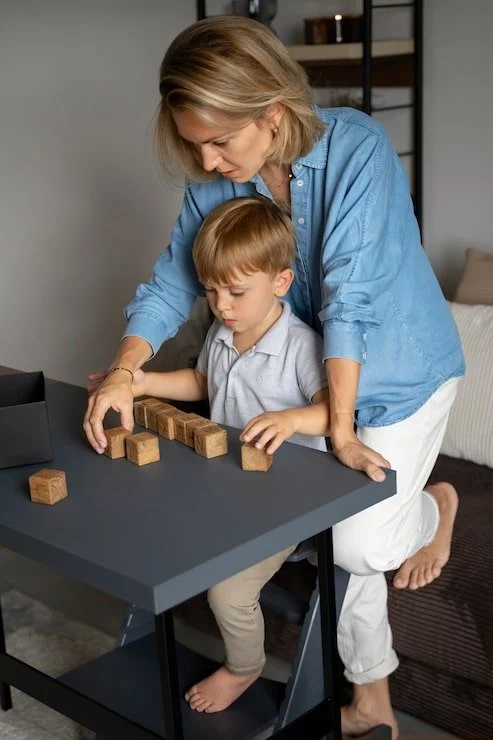
Psychotherapy is sometimes described using the terms top-down and bottom-up.
Top-down approaches often focus primarily on thoughts, meaning, interpretation, and cognitive understanding.
Bottom-up approaches give greater attention to physical sensations, movement, autonomic nervous-system responses, and bodily experience.
Sensorimotor Psychotherapy integrates both.
A client may explore thoughts and beliefs while also noticing what happens physically when those beliefs become activated.

What Does a Sensorimotor Session Look Like?
A session may still look like ordinary therapy.
You generally remain seated and fully clothed.
The therapist may invite you to slow down and notice what is happening internally as you discuss something important.
For example:
"What do you notice in your body as you say that?"
You might notice your shoulders rising.
Your hands tightening.
Your breath becoming shallow.
The therapist may then help you explore the sensation with curiosity rather than immediately moving back into the story.

Tracking Sensations
One sensorimotor skill involves tracking bodily sensations.
You might notice:
Where a sensation begins
Whether it moves
Whether it becomes stronger or weaker
Whether it has a temperature
Whether there is an urge to move
What happens when you direct attention toward or away from it
This can help clients develop greater awareness of nervous-system activation.


Movement Impulses and Incomplete Defensive Responses
Traumatic situations can interrupt natural protective actions.
A person may have wanted to:
Run.
Push someone away.
Raise their hands.
Turn away.
Call for help.
But they were unable to do so.
Sensorimotor work may carefully explore movement impulses that arise when trauma-related activation appears.
This does not mean reenacting trauma.
The process is typically slow and controlled.
The therapist helps the client remain aware of the present while observing how the body responds.

Sensorimotor Psychotherapy and Freeze Responses
People sometimes criticize themselves for freezing during frightening experiences.
They may think:
"Why didn't I fight back?"
"Why didn't I leave?"
"Why didn't I say anything?"
Freeze is not necessarily a conscious choice.
It can be an automatic survival response.
Understanding this can reduce shame.
Therapy may help clients recognize that the nervous system was trying to protect them using the resources available at the time.

Sensorimotor Psychotherapy and Attachment
Sensorimotor Psychotherapy can also examine attachment-related bodily responses.
Relationship situations may create immediate physiological reactions.
A partner becomes distant.
Your chest tightens.
Someone gets too close emotionally.
You feel an urge to pull away.
Someone appears disappointed.
Your body prepares to appease them.
These reactions may reflect learned patterns associated with earlier relationships.

Window of Tolerance
Trauma therapy often uses the concept of the window of tolerance.
Within this range, a person can experience emotion while remaining sufficiently regulated to think, communicate, and stay connected to the present.
Outside the window, someone may become:
Hyperaroused: panicked, agitated, angry, overwhelmed, hypervigilant.
or
Hypoaroused: numb, disconnected, shut down, exhausted, detached.
Sensorimotor work may help clients recognize these shifts earlier and develop ways of returning toward a more regulated state.

What Can Sensorimotor Psychotherapy Help With?
Sensorimotor-informed interventions may be considered when addressing:
Trauma
PTSD-related symptoms
Childhood trauma
Physical responses to trauma reminders
Hypervigilance
Emotional dysregulation
Anxiety
Freeze responses
Dissociation-related experiences
Attachment concerns
Chronic tension
Difficulty feeling safe
Shame
Relationship triggers
Body-based distress
Appropriateness depends on the client's needs and therapist training.
Sensorimotor Psychotherapy vs. Somatic Therapy
Sensorimotor Psychotherapy is a specific therapeutic model with its own training framework.
Somatic therapy is a broader term that may refer to many therapeutic approaches that incorporate bodily awareness and nervous-system regulation.
Sensorimotor Psychotherapy can therefore be understood as one specific type of body-oriented psychotherapy.
Sensorimotor Psychotherapy vs. EMDR
Both Sensorimotor Psychotherapy and EMDR may be used within trauma treatment, but they are distinct approaches.
EMDR follows a structured protocol involving memory processing and bilateral stimulation.
Sensorimotor Psychotherapy places greater emphasis on moment-to-moment awareness of bodily sensations, posture, movement, nervous-system activation, and trauma-related physical responses.
Therapists may sometimes integrate aspects of both when appropriately trained.
Do I Have to Touch My Therapist?
No.
Sensorimotor Psychotherapy does not generally require physical contact between therapist and client.
The work focuses primarily on the client's internal awareness, movement, posture, and bodily experience.
Any therapeutic intervention should respect consent and personal boundaries.
Is Sensorimotor Psychotherapy Only for Trauma?
It is strongly associated with trauma and attachment treatment, but body-oriented awareness may also be incorporated into work involving anxiety, emotional regulation, relationships, and other concerns.
The appropriateness of the approach depends on the individual.
Trauma Treatment Should Be Paced Carefully
Sensorimotor therapy is not about overwhelming someone with intense physical activation.
Treatment typically emphasizes mindful awareness and maintaining enough stability to remain connected with the present.
If activation becomes too intense, the therapist may help the client orient back toward safety and regulation.
Sensorimotor-Informed Therapy at Lifepath Center
Lifepath Center provides individualized trauma-informed therapy in Riverside.
Depending on therapist training and client needs, sensorimotor-informed interventions may be integrated with EMDR, Brainspotting, CBT, DBT-informed skills, ACT, mindfulness, attachment-informed therapy, and other somatic or trauma-focused approaches.

Sensorimotor Psychotherapy in Riverside, California
Lifepath Center provides in-person mental health services in Riverside and telehealth therapy throughout California.
If your body seems to respond to danger even when your mind knows you are safe, therapy can help you understand those reactions with greater compassion and develop new ways of responding.
Your Body's Reactions May Have Made Sense at the Time
Hypervigilance may have kept you alert.
Freezing may have protected you.
Shutting down may have helped you survive something overwhelming.
Those reactions were not necessarily evidence that something was wrong with you.
They may have been evidence that your nervous system was doing its best to protect you.
Therapy can help your body begin learning that the present may be different from the past.
Contact Lifepath Center to learn more about Sensorimotor Psychotherapy and body-oriented trauma therapy in Riverside, CA.

Frequently Asked Questions About Sensorimotor Psychotherapy
-
Sensorimotor Psychotherapy is a body-oriented psychotherapy developed by Dr. Pat Ogden that incorporates awareness of physical sensations, movement, trauma responses, attachment, and cognition.
-
Yes. Sensorimotor Psychotherapy is a specific body-oriented approach that falls within the broader category of somatic therapies.
-
Not necessarily. The therapist may focus significantly on what occurs emotionally and physically when aspects of an experience are activated rather than requiring extensive detailed retelling.
-
The approach generally does not require therapist-client touch. Work typically focuses on the client's awareness of bodily sensations, posture, and movement.
-
The window of tolerance refers to a range of nervous-system activation in which someone can remain emotionally engaged while still feeling sufficiently regulated and present.
-
Sensorimotor approaches may help clients understand automatic defensive responses such as freezing and explore associated physical patterns without blaming themselves.
-
Appropriately trained Lifepath Center therapists may incorporate sensorimotor-informed interventions based on client needs and therapist training.