

Gottman Method Couples Therapy in Riverside, CA

When You Keep Having the Same Argument in Different Forms
Some couples don't lack love.
They lack a way out of the pattern.You may argue about money, parenting, chores, intimacy, in-laws, work, or communication, but the conflict often follows the same path.
One person criticizes.
The other becomes defensive.
Someone shuts down.
Resentment builds.
You both feel misunderstood.
Then the same pattern happens again.
The Gottman Method is a research-informed approach to couples therapy that helps partners better understand their relationship patterns, strengthen friendship and emotional connection, improve conflict management, and build healthier ways of communicating.
At Lifepath Center, appropriately trained therapists may incorporate Gottman Method interventions into couples therapy when clinically appropriate.We provide couples therapy in Riverside, California, as well as telehealth services throughout California.

What Is the Gottman Method?
The Gottman Method was developed from decades of relationship research by Drs. John and Julie Gottman. The approach focuses on helping couples understand the behaviors and interaction patterns that strengthen relationships as well as those that contribute to distress.
Rather than focusing only on conflict, Gottman Method Couples Therapy also emphasizes:
Friendship
Admiration
Emotional connection
Shared meaning
Trust
Commitment
Conflict management
Repair
Turning toward one another
The goal isn't to eliminate every disagreement. Healthy couples still disagree. The focus is learning to manage conflict in ways that preserve respect, emotional safety, and connection.


The Four Horsemen of Relationship Conflict
One of the best-known Gottman concepts is the Four Horsemen—four communication patterns associated with relationship distress.
Criticism
Criticism attacks a person's character rather than addressing a specific behavior.
Instead of:
"I felt overwhelmed when the dishes weren't done."
criticism may sound like:
"You're so lazy. You never help with anything."

Defensiveness
Defensiveness often appears when someone feels blamed or attacked.
It may involve:
Making excuses
Counterattacking
Denying responsibility
Minimizing the issue
Turning the complaint back on the partner
Defensiveness is understandable, but it can keep couples from resolving the original concern.
Contempt
Contempt involves communicating disgust, superiority, mockery, or disrespect.
Examples may include:
Eye rolling
Sarcasm
Name-calling
Ridicule
Belittling
Speaking to a partner with superiority
Contempt can be especially damaging because it communicates disrespect at the relationship level.
Stonewalling
Stonewalling occurs when one partner emotionally or physically withdraws from the interaction.
They may stop responding, leave the room, avoid eye contact, or shut down.
Stonewalling is often associated with feeling emotionally overwhelmed.
Therapy may help couples learn to recognize flooding and take structured breaks rather than completely disengaging.
The Antidotes to the Four Horsemen
Contempt involves communicating disgust, superiority, mockery, or disrespect.
Examples may include:
Eye rolling
Sarcasm
Name-calling
Ridicule
Belittling
Speaking to a partner with superiority
Contempt can be especially damaging because it communicates disrespect at the relationship level.
What Are Love Maps?
Love Maps refer to how well partners know each other's internal worlds.
Do you know what your partner is stressed about right now?
What they're looking forward to?
What they're afraid of?
What matters most to them?
Long-term relationships can become dominated by logistics:
Who's picking up the kids?
What's for dinner?
Who paid the bill?
What time is the appointment?
Couples can gradually become efficient teammates while losing emotional curiosity about one another.
Gottman interventions may help partners intentionally reconnect.

Fondness and Admiration
Conflict can cause couples to focus heavily on what is wrong.
Over time, negative interactions may overshadow the things that originally created connection.
Gottman Method work often includes rebuilding appreciation.
This doesn't mean pretending problems don't exist.
It means helping partners notice positive qualities and interactions that may have become invisible during prolonged conflict.

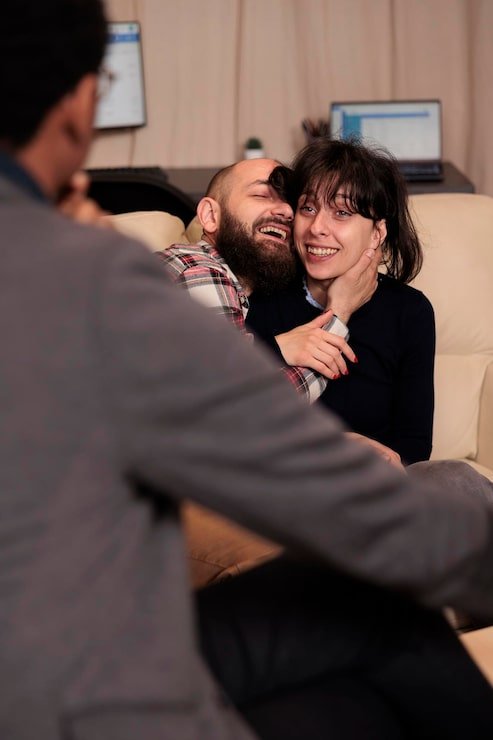
Relationships include small bids for connection throughout the day.
A partner says:
"Look at this."
"Can I tell you what happened?"
"Come sit with me."
"Today was awful."
These moments may seem insignificant.
But repeatedly turning toward or away from one another can shape emotional connection over time.
Couples therapy may help partners become more aware of these bids and respond more intentionally.
Turning Toward Instead of Away
Managing Conflict vs. Solving Every Problem
Not every relationship problem has a perfect solution.
Some differences are ongoing.
Partners may differ in:
Spending habits
Social needs
Parenting styles
Cleanliness
Sexual desire
Family involvement
Work priorities
Personality
Need for structure
Need for independence
Gottman Method Couples Therapy distinguishes between solvable problems and recurring differences that may require ongoing management.
The goal isn't forcing one partner to become like the other.
It may involve learning how to discuss differences without damaging the relationship.


What Is Emotional Flooding?
During intense conflict, the nervous system can become overwhelmed.
When someone is flooded, it can be difficult to think clearly, listen, empathize, or communicate effectively.
You may experience:
Racing heart
Muscle tension
Anger
Panic
Shutting down
Urge to leave
Difficulty processing what your partner is saying
Trying to solve the problem while flooded often makes things worse. Gottman-informed therapy may teach couples how to recognize physiological overwhelm and use structured breaks before returning to the conversation.
Repair Attempts Matter
Healthy couples don't avoid every painful interaction.
They become better at repairing.
A repair attempt might sound like:
"I said that badly. Let me try again."
"We're getting off track."
"I don't want to fight with you."
"Can we restart?"
"I understand why you're upset."
The ability to recognize and accept repair attempts can prevent conflict from escalating.
Gottman Method and Trust
Trust is built through repeated interactions.
It can be strengthened when partners consistently respond with reliability, honesty, empathy, and emotional availability.
It can also be damaged through betrayal, secrecy, repeated broken promises, or emotional disconnection. Couples therapy may help partners understand what trust means in their relationship and identify what would be necessary for repair.
Gottman Method and Intimacy
Emotional and physical intimacy can decline when unresolved resentment accumulates.
Some couples try to fix intimacy directly without addressing the emotional disconnection underneath it.
Therapy may explore:
Friendship
Affection
Emotional safety
Sexual communication
Stress
Resentment
Attachment
Conflict patterns
Expectations
Differences in desire
The goal is not to impose one standard for what intimacy should look like.
It is helping the couple create a relationship that feels connected and mutually respectful.
What Happens in Gottman Method Couples Therapy?
Treatment may include:
Relationship assessment
Identifying conflict patterns
Communication exercises
Learning gentle start-ups
Practicing repair
Strengthening friendship
Increasing fondness and admiration
Improving emotional connection
Understanding perpetual conflict
Managing physiological flooding
Exploring trust
Building shared meaning
Establishing relationship rituals
Increasing positive interactions
Therapy is typically collaborative and tailored to the couple's specific concerns.

The Sound Relationship House
The Gottman Method often uses the Sound Relationship House as a framework for healthy relationships.
It includes areas such as:
Building Love Maps
Sharing fondness and admiration
Turning toward instead of away
Maintaining a positive perspective
Managing conflict
Making life dreams come true
Creating shared meaning
Trust and commitment form foundational components of the model.

Couples Therapy Is Not About Deciding Who Is Right
Partners often arrive in therapy hoping the therapist will confirm:
"See? I'm right."
But couples therapy is rarely most effective when it becomes a courtroom.
The goal is to understand the interaction between partners and help both people communicate more effectively.
Responsibility matters.
Accountability matters.
But the larger focus is helping the couple change patterns that keep producing disconnection.

When Gottman Method Couples Therapy May Not Be Appropriate
Couples therapy is not appropriate in every situation.
When there is ongoing abuse, coercive control, intimidation, or serious safety concerns, conjoint couples therapy may not be recommended.
A therapist should assess relationship dynamics and determine whether couples treatment is appropriate.
Gottman Method Couples Therapy at Lifepath Center
Lifepath Center provides couples therapy for communication difficulties, recurring conflict, emotional disconnection, trust concerns, parenting stress, intimacy concerns, relationship transitions, and other relational challenges.
Depending on your therapist's training and your goals, Gottman-informed interventions may be integrated with Emotionally Focused Therapy, attachment-informed therapy, family systems approaches, CBT, DBT-informed communication skills, and other therapeutic methods.
Couples Therapy in Riverside, California
Lifepath Center provides in-person couples counseling in Riverside and telehealth services throughout California when appropriate.
You do not have to wait until the relationship is at a breaking point to seek therapy.
Couples therapy can also be used to strengthen connection, improve communication, navigate transitions, and address patterns before they become deeply entrenched.
The Goal Isn't to Never Fight Again
Conflict is part of relationships.
The goal is learning how to disagree without destroying emotional safety.
You can learn to recognize escalation earlier.
Communicate complaints without attacking character.
Take responsibility.
Repair after difficult moments.
Stay curious about one another.
And rebuild the friendship underneath the conflict.
Contact Lifepath Center to learn more about Gottman Method Couples Therapy in Riverside, CA.

Frequently Asked Questions About Gottman Method Couples Therapy
-
The Gottman Method is a research-informed approach to couples therapy developed from decades of relationship research by Drs. John and Julie Gottman.
-
The Four Horsemen are criticism, defensiveness, contempt, and stonewalling—interaction patterns commonly addressed in Gottman Method Couples Therapy.
-
Yes. Gottman-informed interventions may help couples communicate concerns more effectively, manage conflict, reduce escalation, and improve repair.
-
No. The approach may be used with committed couples regardless of marital status when clinically appropriate.
-
Gottman-informed couples therapy may include work related to trust and relationship repair. The appropriate treatment depends on the circumstances, safety, accountability, and willingness of both partners to participate.
-
No. They are different approaches. Gottman Method therapy emphasizes research-based relationship patterns and practical interventions, while Emotionally Focused Therapy is particularly focused on attachment and emotional bonding. Therapists may sometimes integrate elements of both.
-
Lifepath Center therapists may incorporate Gottman-informed interventions based on their training and each couple's individualized treatment needs.