
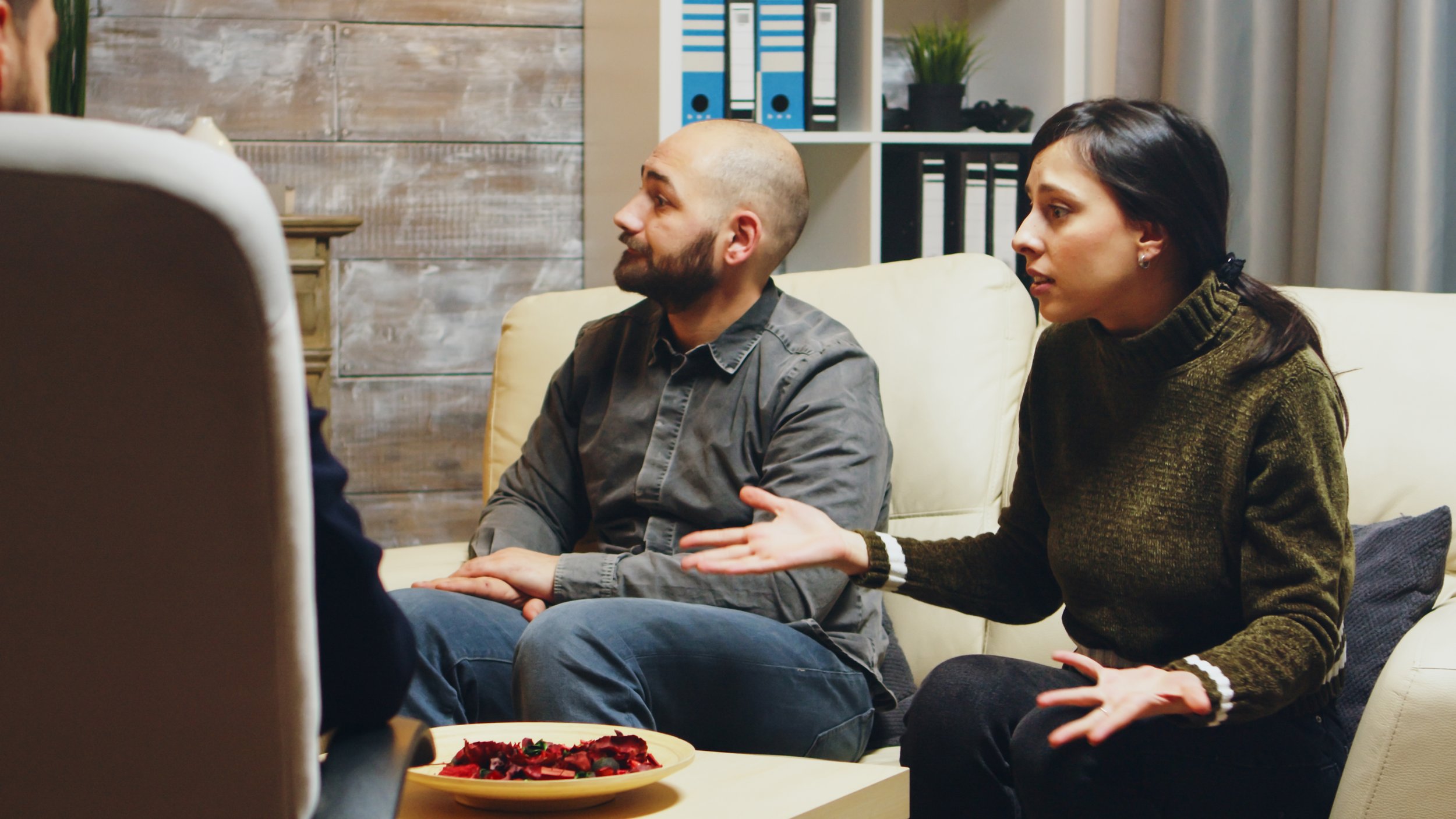
Attachment-Based Therapy in Riverside, CA

Why Do Certain Relationships Bring Out Reactions You Barely Recognize in Yourself?
Maybe you feel secure until someone pulls away.
Then everything changes.
You begin analyzing texts.
Looking for signs something is wrong.
Seeking reassurance.
Preparing for rejection.
Or perhaps closeness itself feels uncomfortable. When relationships become emotionally intense, you withdraw, shut down, change the subject, or convince yourself you don't need anyone.Sometimes people experience both.
You crave connection while simultaneously fearing it.Attachment-based and attachment-informed therapy explores how early and later relationship experiences may influence the ways we connect, trust, seek reassurance, set boundaries, handle conflict, and respond to emotional closeness. At Lifepath Center, therapists may incorporate attachment-informed concepts into individual, couples, and family therapy depending on each client's needs.

What Is Attachment Theory?
Attachment theory originated through the work of psychiatrist John Bowlby and psychologist Mary Ainsworth.
The theory proposes that human beings have an innate need for connection with important caregivers and attachment figures.Our experiences in early relationships may influence expectations such as:
Will people respond when I need them?
Is it safe to depend on someone?
Do my emotions matter?
Can I trust people to stay?
What happens when I become vulnerable?
Attachment is not simply about childhood. Relationship experiences throughout life can strengthen, challenge, or reshape attachment patterns.
What Are Attachment Styles?
Attachment is often discussed using several broad patterns. These categories can be useful frameworks, but they aren't permanent personality labels.

Secure Attachment
People with relatively secure attachment may generally feel comfortable with both intimacy and independence.
They may be more able to:
Trust others
Communicate emotional needs
Tolerate healthy separation
Repair after conflict
Maintain boundaries
Seek support when needed
Secure attachment doesn't mean never experiencing jealousy, anxiety, or conflict.
It generally refers to greater flexibility and security within relationships.
Anxious Attachment
People with anxious attachment tendencies may become highly sensitive to signs of rejection or disconnection.
This might involve:
Fear of abandonment
Reassurance seeking
Overanalyzing communication
Difficulty tolerating uncertainty
Feeling emotionally dependent on a partner's response
Becoming intensely distressed by distance
Difficulty trusting that relationships are stable
People-pleasing
Losing oneself in relationships
A small shift in tone can feel enormous.

Avoidant Attachment
People with avoidant attachment tendencies may protect themselves by creating emotional distance.
This may involve:
Difficulty expressing needs
Discomfort with vulnerability
Pulling away during conflict
Strong emphasis on independence
Difficulty asking for support
Minimizing emotional needs
Feeling overwhelmed by closeness
Keeping relationships at an emotional distance
Avoidance doesn't necessarily mean someone doesn't care. Sometimes distance has become the safest way they know to manage vulnerability.

Fearful-Avoidant or Disorganized Patterns
Some people experience a push-pull relationship with intimacy.
They may desperately want connection while also fearing it.
Relationships can feel both comforting and threatening.
This may involve:
Rapid shifts between closeness and withdrawal
Difficulty trusting others
Fear of abandonment
Fear of dependence
Emotional intensity
Conflicting needs for connection and distance
Trauma and inconsistent relationship experiences may influence these patterns, although attachment should never be reduced to a simple online label.

Attachment Styles Are Not Diagnoses
Being anxiously or avoidantly attached is not a psychiatric diagnosis.
Attachment patterns are frameworks for understanding relationship tendencies.
People are complex.
You may behave securely in one relationship and anxiously in another.
You may change over time.
And therapy isn't about assigning you an attachment label and deciding that's who you are forever.
It's about understanding patterns so you can have more choice in how you respond.

How Do Attachment Patterns Develop?
Attachment patterns may be influenced by early caregiving experiences, but childhood is not the only factor.
Experiences that may affect attachment include:
Emotional availability of caregivers
Inconsistent caregiving
Family conflict
Emotional neglect
Abuse
Loss
Separation
Bullying
Betrayal
Romantic relationships
Friendship experiences
Trauma
Repeated rejection
Major life transitions
Some people grew up in loving homes and still develop insecurity after painful adult relationships. Others experienced significant childhood challenges and later developed secure, healthy relationships. Attachment can evolve.

Why Does Fear of Abandonment Feel So Intense?
When attachment anxiety is activated, the nervous system can interpret emotional distance as a significant threat.
You might notice:
Racing thoughts
Urges to call or text repeatedly
Difficulty sleeping
Constant checking
Fear that the relationship is ending
Emotional escalation
Difficulty focusing on anything else
The goal of attachment-informed therapy isn't to shame these reactions. It's to understand what they are trying to accomplish and develop healthier ways of seeking security.


Hyper-Independence Can Also Be a Protective Strategy
Attachment concerns don't always look needy.
Sometimes they look extremely independent.
You might think:
"I don't need anyone."
"I handle everything myself."
"Depending on people is dangerous."
"If I don't expect anything, I can't be disappointed."
Hyper-independence may be celebrated socially.
But sometimes it reflects a learned belief that relying on others is unsafe.
Therapy can help distinguish healthy independence from emotional self-protection.

Attachment and People-Pleasing
People-pleasing may be connected with fears such as:
"If they're unhappy with me, they'll leave."
"If I disappoint someone, I'll lose the relationship."
"I have to earn love."
This can lead to:
Weak boundaries
Over-functioning
Suppressing needs
Avoiding conflict
Taking responsibility for others' emotions
Resentment
Burnout
Attachment-informed therapy may help clients develop relationships in which connection doesn't require abandoning themselves.

Attachment and Conflict
Conflict can activate deeply held fears.
Someone with anxious tendencies may pursue harder when they feel disconnected. Someone with avoidant tendencies may withdraw when they feel overwhelmed. Then each person's coping style intensifies the other's.
Pursuit → Withdrawal → Increased pursuit → Increased withdrawal
Therapy can help people recognize the cycle before it takes over.
Attachment and Trauma
Trauma can affect a person's ability to experience relationships as safe.
If people who were supposed to provide safety were also sources of fear, betrayal, inconsistency, or neglect, later relationships may trigger complex emotional responses.
Trauma-informed attachment work can help clients explore these experiences gradually while developing greater internal and relational safety.

Attachment-Based Therapy for Individuals
Individual therapy may explore:
Relationship patterns
Fear of abandonment
Difficulty trusting
Emotional avoidance
People-pleasing
Boundaries
Hyper-independence
Dependency concerns
Intimacy
Self-esteem
Vulnerability
Childhood relationship experiences
Current relationship triggers
The goal is not to blame parents or spend every session discussing childhood. Earlier relationships may be explored because they can provide useful context for current patterns.

Attachment-Informed Couples Therapy
Couples therapy may help partners understand what happens when attachment fears become activated.
Instead of:
"You're too needy."
therapy might explore:
"What happens inside you when your partner becomes distant?"
Instead of:
"You don't care about anything."
therapy might explore:
"What happens inside you when conflict becomes emotionally intense?"
Understanding the vulnerability beneath protective behavior can change the conversation.

Can Attachment Patterns Change?
Yes.
Attachment patterns are not necessarily fixed.
New experiences can reshape expectations about relationships.
Secure relationships, supportive friendships, therapy, self-awareness, boundary development, emotional regulation, and corrective relational experiences can all contribute to greater security.
This process is sometimes described as developing earned secure attachment.

What Can Attachment-Informed Therapy Help With?
Attachment-informed interventions may be relevant when addressing:
Relationship difficulties
Fear of abandonment
Trust concerns
Emotional intimacy
People-pleasing
Boundary difficulties
Hyper-independence
Difficulty expressing emotions
Recurring relationship patterns
Trauma
Childhood emotional neglect
Low self-esteem
Identity concerns
Relationship anxiety
Difficulty asking for support
Emotional withdrawal
Treatment should be individualized to the client's needs rather than based solely on an attachment label.

Attachment-Informed Therapy at Lifepath Center
Lifepath Center therapists may integrate attachment-informed concepts with approaches such as Emotionally Focused Therapy, Internal Family Systems-informed interventions, CBT, DBT-informed skills, trauma-informed therapy, EMDR, Brainspotting, family systems therapy, and other therapeutic methods.
Attachment Therapy in Riverside, CA
Lifepath Center provides individual, couples, and family therapy in Riverside, California, as well as telehealth therapy throughout California.
If you repeatedly find yourself in relationships where you feel anxious, disconnected, emotionally guarded, overly responsible, or afraid to be vulnerable, therapy can help you understand the pattern beneath the pattern.
You Are Not Destined to Repeat the Same Relationship Forever
The way you learned to connect may have developed for a reason.
Maybe pursuing kept people close.
Maybe withdrawing protected you.
Maybe pleasing everyone reduced conflict.
Maybe relying only on yourself felt safer than being disappointed. Those strategies may have helped you once. You can also learn something new.
Attachment-informed therapy can help you build relationships with greater security, boundaries, authenticity, and emotional connection. Contact Lifepath Center to learn more about attachment-based and attachment-informed therapy in Riverside, CA.

Frequently Asked Questions About Attachment-Based Therapy
-
Attachment-based therapy uses concepts from attachment theory to explore how relationship experiences may influence trust, emotional closeness, boundaries, conflict, and other relational patterns.
-
Attachment is often discussed using secure, anxious, avoidant, and fearful-avoidant or disorganized patterns. These are frameworks rather than psychiatric diagnoses.
-
Yes. Attachment patterns can evolve over time through healthy relationships, increased self-awareness, therapy, and new relational experiences.
-
No. Anxious attachment is not a psychiatric diagnosis.
-
Attachment-informed therapy may help clients understand abandonment fears, identify triggers, develop emotional-regulation skills, strengthen boundaries, and build more secure relationship patterns.
-
No. Childhood relationships may be explored when relevant, but attachment patterns can also be influenced by adult relationships, trauma, loss, and other life experiences.
-
Lifepath Center therapists may incorporate attachment-informed interventions into individualized treatment depending on their training and the client's needs.